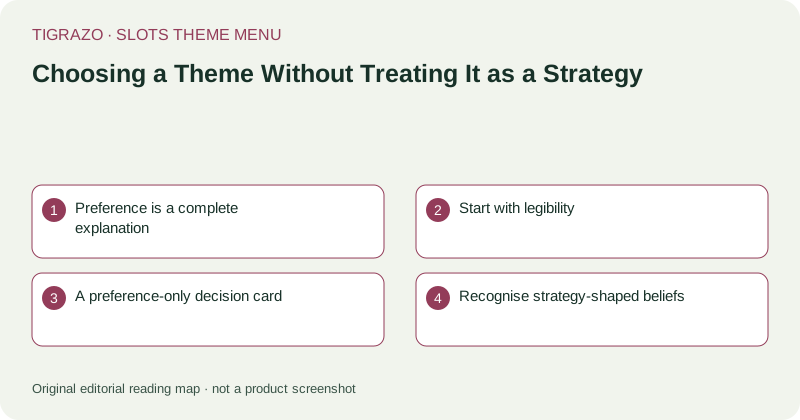
Preference is a complete explanation
You can prefer simple fruit symbols, richly drawn landscapes or quiet abstract shapes without attaching a financial argument. An aesthetic choice does not need to be defended as a better opportunity. It can simply make an information page more comfortable to read.
This distinction is important because design language often borrows words associated with success. Bright, strong or lucky may describe a mood, but they are not measurements of game performance. Keep subjective impressions attached to their visual source.
Start with legibility
Before considering a story setting, check whether symbols, stake labels and information controls are distinguishable. A theme that obscures these elements is less usable even if its artwork is appealing. Readability is a practical criterion, not a technique for altering results.
Comfort also includes animation intensity and sound. If a screen feels overstimulating, the appropriate response may be to leave it. There is no obligation to tolerate an uncomfortable presentation because its theme seems popular or familiar.
A preference-only decision card
Consider a hypothetical reader comparing a quiet illustrated forest with a bright concert stage. The decision card can ask straightforward questions without making either design a financial recommendation.
- Which screen keeps text clear at the intended display size?
- Which symbols are easiest to tell apart?
- Are sound and motion comfortable?
- Can the written rules be understood independently of the story?
- Does the theme encourage a sense of unfinished business?
The final question identifies a possible attention pressure, not a hidden advantage. A story that invites continuation does not make continuation necessary.
Recognise strategy-shaped beliefs
Changing to an animal theme after losses, returning to a favourite colour or waiting for a seasonal symbol can feel purposeful. Without a defined rule connecting those actions to an outcome, they do not provide predictive information. Independent spins are not due because a theme feels meaningful.
Likewise, a published RTP cannot turn theme selection into a session guarantee. It concerns long-run expected return over wager volume under specified conditions. It does not promise a particular return during the time someone spends with a preferred design.
Let the menu end at the menu
A collection page is useful when it clarifies taste and explains design. It need not lead to a session at all. Reading about art direction, comparing interfaces or deciding that no presentation feels comfortable are all complete outcomes.
If someone does choose to play, their stopping point should remain separate from the theme's story and from earlier results. A favourite setting is not a reason to extend a limit, and a different setting is not a method for repairing losses.